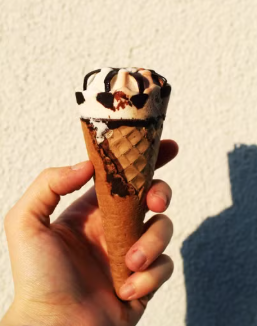
My Daughter Opened Her Favorite Ice Cream After School — What She Found Surprised Us
There are some everyday moments that feel completely ordinary—until they suddenly aren’t.
This is a story about one of those moments. It started like any other afternoon after school, with a tired child excited for a small treat… and ended with a surprising discovery that made us rethink how we store and check even the simplest foods at home.
It involves ice cream, curiosity, and a reminder that even sealed products aren’t always as perfect as we assume.
A Normal After-School Routine
It was one of those warm afternoons when my daughter came home from school looking exhausted but happy. Like most kids, she had a simple routine:
- Drop her backpack near the door
- Kick off her shoes
- Ask for a snack
- And usually, head straight to the freezer for something sweet
That day, she had been looking forward to her favorite ice cream since morning. She even mentioned it before leaving for school.
It was a small reward we had agreed on—a simple comfort food after a long school day.
Nothing unusual. Nothing suspicious. Just ice cream waiting in the freezer.
Or so we thought.
The Moment Everything Changed
She ran to the kitchen, opened the freezer, and pulled out the box with excitement. It was her favorite flavor—something she had eaten many times before without issue.
But almost immediately, something felt off.
Instead of her usual cheerful reaction, she paused.
Then she called out:
“Mom… something is weird with this.”
At first, I assumed she was just being picky or that the ice cream had partially melted and refrozen. That happens sometimes when the freezer door isn’t fully closed.
But when I walked over and looked at it, I realized this wasn’t the usual situation.
What We Found Inside the Ice Cream
The packaging looked normal from the outside. No damage. No leaks. No signs of tampering.
But once we opened the container, a few things stood out immediately:
- The texture was slightly grainy instead of smooth
- There were small ice crystals throughout
- The surface looked uneven, almost “re-frozen”
- One side had a strange indentation, as if it had softened and collapsed
My daughter noticed it faster than I did.
“I don’t think this looks like my ice cream,” she said.
And she was right.
The First Assumption: Freezer Malfunction
My first thought was simple: maybe the freezer temperature had fluctuated.
Freezers sometimes go through short cycles where:
- Power is interrupted briefly
- The door is not fully sealed
- Items near the front partially thaw
This can cause ice cream to lose its creamy texture and become icy or grainy.
So we checked:
- The freezer temperature
- Other frozen items
- The door seal
Everything else looked perfectly normal.
That made things more confusing.
A Closer Look at the Packaging
When we examined the ice cream more carefully, we noticed something subtle:
The lid was slightly raised on one side—not enough to be obvious at first glance, but enough to suggest it may have been opened or compromised at some point.
That’s when the situation shifted from “maybe a freezer issue” to something more concerning.
We asked ourselves:
- Was this opened earlier without realizing it?
- Did it thaw during transport from the store?
- Could it have been improperly sealed at the factory?
There was no immediate answer.
The Surprising Realization
After a few minutes of confusion, we checked the purchase details and realized something important:
The ice cream had been part of a multi-item grocery bag placed near warm groceries during the trip home.
In hot weather, even a short delay or improper storage can cause frozen items to partially thaw and then refreeze improperly.
That explained:
- The icy texture
- The uneven surface
- The slightly distorted shape
It wasn’t unsafe in that moment—but it definitely wasn’t the quality we expected.
Still, for my daughter, the disappointment felt very real.
Why Ice Cream Changes Texture After Thawing
Ice cream is more delicate than most people realize. When it melts and refreezes, its structure changes.
Here’s what happens:
1. Ice crystals grow larger
Instead of smooth creaminess, you get a grainy texture.
2. Air content is lost
Ice cream becomes dense and less fluffy.
3. Fat and water separate
This creates uneven layers and icy patches.
4. Shape distortion occurs
Softened areas collapse and refreeze unevenly.
So even if ice cream looks “fine” from the outside, its quality can be significantly affected.
The Safety Question: Is It Still Safe to Eat?
In most cases, slightly thawed and refrozen ice cream is:
- Not ideal in texture or taste
- But still safe if it remained cold and was not contaminated
However, it should be discarded if:
- It smells unusual
- The container was open or damaged
- It shows signs of contamination
- It was left at room temperature for too long
In our case, the issue was quality rather than safety—but it still wasn’t something we wanted to eat.
My Daughter’s Reaction
What stood out most wasn’t the ice cream itself—it was her reaction.
She wasn’t angry. She wasn’t dramatic.
She just looked disappointed and said:
“I was really looking forward to this.”
That moment stayed with me longer than expected.
Because for adults, it was just a grocery issue.
But for her, it was a small moment of joy that didn’t turn out the way she expected.
What We Learned From a Simple Ice Cream Incident
This small experience taught us a few surprisingly useful lessons:
1. Frozen food needs consistent temperature
Even short exposure to heat can change quality.
2. Transport matters more than we think
Frozen items should be purchased last and stored quickly at home.
3. Packaging should always be checked
Even minor changes in seals or lids can matter.
4. Kids notice small details
They often pick up changes adults overlook.
How to Properly Store Ice Cream at Home
To avoid similar situations, here are a few practical tips:
Keep freezer temperature stable
Ideally at or below -18°C (0°F)
Store ice cream in the coldest part of the freezer
Avoid the door area where temperature fluctuates.
Minimize air exposure
Always close the lid tightly after use.
Avoid repeated softening
Don’t leave ice cream out while serving for long periods.
Use insulated bags when shopping
Especially in hot weather.
When Ice Cream “Surprises” Should Concern You
While most ice cream issues are harmless, be cautious if you notice:
- Strange smell or sour odor
- Visible mold (rare but possible)
- Strong freezer burn with discoloration
- Evidence of tampering or broken seals
In such cases, it’s best not to consume it.
Final Thoughts
What started as a simple after-school treat turned into a small but memorable moment in our day. It wasn’t a dramatic discovery or a dangerous situation—but it was a reminder that even everyday foods like ice cream can tell a story if we pay attention closely enough.

Hi, I’m Kashif Khan, the creator and writer behind Icwmr.com. I started this website to share my interest in Autos and Smartphones with people who want honest information and practical knowledge. I enjoy researching the latest technologies, reviewing new devices, and simplifying complex topics so that everyone can understand them easily.
